Late Night Thoughts on Film / Bad Writing – Pluribus
Written from the perspective of a director and animator frustrated with sci‑fi that mistakes scale and branding for intelligence, and ambiguity for depth.
Christmas night, after family dinner, I was too tired to go anywhere. I thought I’d just chill and finish watching Pluribus.
I love movies. I always did. I can’t help but see subtext and feel what choices mean, how things are framed, how stories are told. I got into the industry because I love cinema. But lately I’ve watched a lot of bad movies and shows. More and more, films feel just like products. Art is fading, and real emotion feels absent from the audience experience. So I wanted something good. I’ve been working hard on animation and my short films, and at the same time I’m taking a storyboard course to improve my directing skills.
A few years ago, I started taking notes on what I consider good directing.
I might eventually write an article “On Directing” once I finish my next film and add a few more notes. One thing I’ve learned very clearly: ambiguity of meaning is fine (sometimes even desirable) but ambiguity of plot is lame. You can alienate an audience with big ideas, that’s okay. But if you use those ideas, don’t trivialize them or treat the audience like idiots.
Which brings me to Pluribus.
On paper, it had everything: the creator of Breaking Bad (I mean, come on), the incredible Rhea Seehorn, and a high-concept sci‑fi premise about a hive mind assimilating humanity. It was marketed as the perfect, deep, female-driven exploration of free will versus peace.
Instead, what I watched was a show that thinks it’s smarter than it is, insults its audience’s intelligence, makes the main character a lesbian to be in and relies on the most simplistic tropes imaginable. It is, quite frankly, lame as hell. I was angry and frustrated at the characters and what I was watching, constantly trying to keep my eyes from rolling.
1. The Antagonist Problem: Why Rick and Morty Did It Better
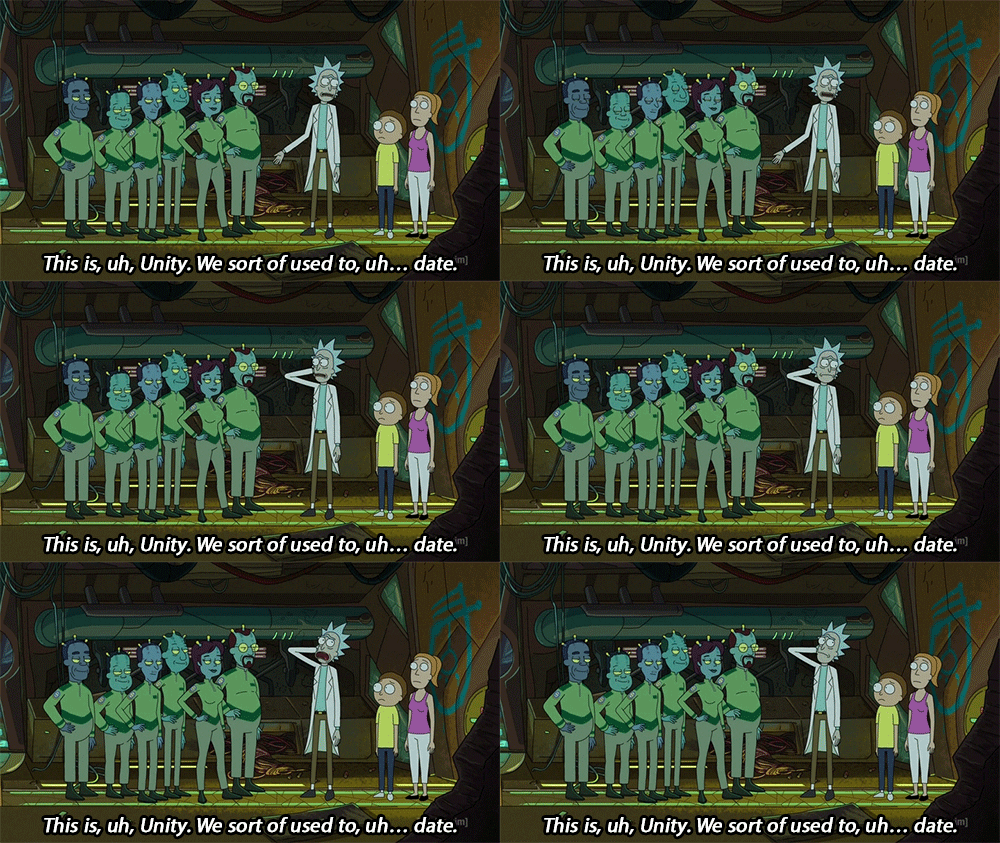
The structural failure of the show starts with the Hive Mind itself. The obvious comparison I kept thinking of was Unity from Rick and Morty and frankly, the animated show wins.
In twenty minutes, Rick and Morty gave us a hive mind that felt like a distinct character. Unity was messy, addicted, and toxic. Her relationship with Rick was heartbreaking because it was a mutual addiction. It was a story about codependency that felt human and clever.
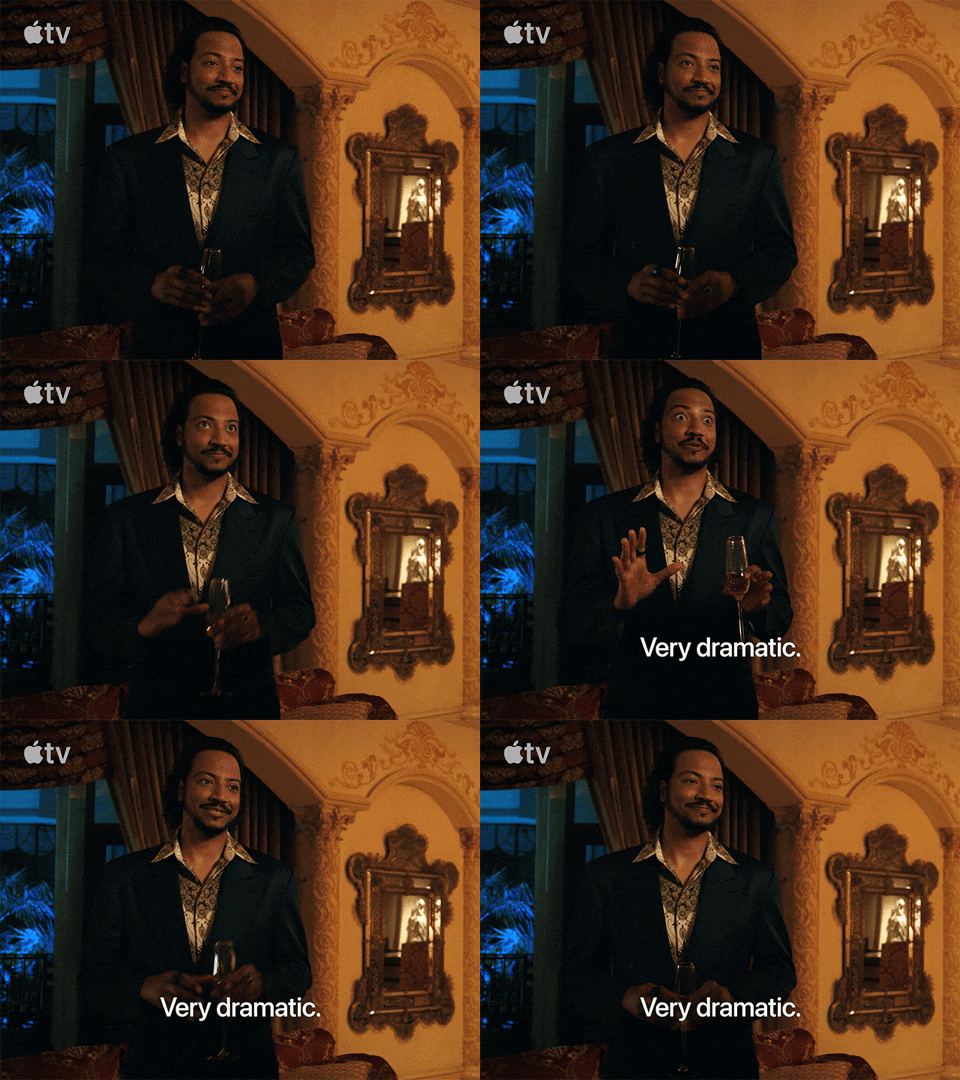
Pluribus, conversely, gives us Zosia. The show presents Zosia the hive’s avatar, as evolved, seductive, hyper‑intelligent. But in reality she’s annoyingly simplistic. She speaks in pseudo‑philosophical platitudes you’d hear from a first‑year philosophy student trying to impress a professor. There’s no real depth just a smug “I have evolved beyond you / I have the knowledge of the world” attitude that the show mistakes for cleverness.
The writers tell us (not show us*) she’s smart, but she never actually does anything smart.
Her logic is circular. She mostly lectures, enables, and serves.
Zosia / Pluribus tries very hard to be “high art,” but ends up sounding like a cult recruiter.
2. The Assassination of Carol’s Character
The show’s biggest offense is what it does to its protagonist, Carol.
In the first few episodes, Carol is set up as a defiant, brilliant survivor. A creative mind, a skeptic, the resistance for humanity’s sake. She feels grounded and sharp.
There’s a crucial scene where Carol uses sodium thiopental (truth serum) on Zosia to prove, scientifically, that the entity cannot lie and is simply a biological vessel for a network. She discovers they eat people. Carol knows, chemically and logically, that the woman in front of her is a puppet.
And yet, by the finale, Carol has apparently forgotten all of this.
She in some kind of Stockholm syndrome state.
The writers force a “tragic romance” where Carol falls in love with Zosia. You can argue that humans are emotional creatures but Carol isn’t just “a human.” She’s a smart human, humanity’s last hope, who tested the drugs and saw the truth. Having her ignore her own scientific findings to play house with a biological bot isn’t complex character work. It’s just bad writing.
All the characters behave unrealistically.
At least the French guy was consistently shallow.
Carol was supposed to be better than that.
3. Sleeping With the Enemy

Sleeping with Zosia completely undermines Carol’s entire “rebel” stance.
Zosia is a biological puppet. That’s not metaphor, it’s literal.
Sleeping with her isn’t complex or provocative. It’s mostly weird and creepy.
Carol lectures the Hive about autonomy and freedom, then uses the Hive’s drone for her own physical comfort. It makes her resistance feel less like a moral stand and more like a tantrum.
This contradiction isn’t explored. it’s ignored. Turning a Sci-Fi conflict into a Soap Opera.
4. The Insult to Grief: Replacing Helen
Carol’s entire journey is supposedly driven by grief: the loss of her partner, Helen. That grief is meant to be her grounding motivation.
By the end of the season, the show seems to forget Helen ever existed.
Carol effectively replaces a real human connection with a basic simulation she’s known for weeks. In retrospect, her grief in the early episodes feels cheap and instrumental. If she can act so jealous and possessive over a hive vessel she barely knows, did she ever really understand the value of the human connection she lost?
The writers discard the memory of the dead wife the moment it becomes inconvenient for their “sexy alien romance.” Maybe they wanted to say that humans will follow emotion or avoid loneliness but if that’s the point, it’s handled in the most shallow way possible.

5. The Withered Apple Fallacy: Why the Hive’s Morality Fails
The show pushes a strange, sanitized morality. Almost like a forced manifesto suggesting that a higher intelligence would automatically see consumption or violence as evil.
But this logic collapses immediately.
An apple that isn’t picked or eaten doesn’t live forever. It withers, rots, and goes to waste. Death and consumption are essential parts of life. By trying to “save” everyone from pain, the Hive isn’t preserving life, it’s creating a stagnant, rotting orchard.
Erasing eight billion distinct personalities to form one peaceful entity isn’t enlightenment.
It’s murder on a planetary scale. The show treats this as deep wisdom instead of villain logic.
Most frustratingly, Carol never really talks back to these ideas. Zosia / Pluribus spends half her screen time lecturing about how individuality is inefficient, no ownership needed or how peace requires submission. It feels like a Wikipedia summary of utilitarianism rather than a real philosophical debate.
Carol the supposed thinker is reduced to being grumpy instead of dismantling the Hive’s basic logic.

6. The Visitor Problem: Manousos
Manousos, the visitor from Paraguay, should be the most important person Carol ever meets. He’s the only other immune human. He has traveled across continents, risking death, studying crystallography and electromagnetic fields to find a cure. He’s focused on the survival of the species.
And Carol treats him with hostility.
This makes zero sense. She spends the whole show complaining about being alone among “zombies.” When the only other immune human finally shows up, she’s suspicious, dismissive, even annoyed, like he’s interrupting her date.
If Carol actually cared about humanity, Manousos would be everything.
Instead, her behavior reveals something else: she doesn’t really care about the cause. She just wants to wallow in her own drama. She pushes away a potential ally because he disrupts her toxic dynamic with the Hive. WHICH MAKES NO SENSE.
Manousos becomes the hero by default simply because he behaves like someone who understands they’re in a survival situation.

7. The Gender Betrayal
I care about good stories and well-written characters.
I have no interest in marketing-driven gender politics. But for a show marketed as female-led, Pluribus ends up reinforcing one of the laziest sexist tropes imaginable.
The woman is emotional and irrational.
The man does the math.
Carol is presented as a genius rebel. Manousos actually acts like one.
Whether intentional or not, the show suggests that when things get serious, the woman will be ruled by insecurity and emotion, while the man focuses on solving the apocalypse. It’s not a statement, it’s a failure of writing.
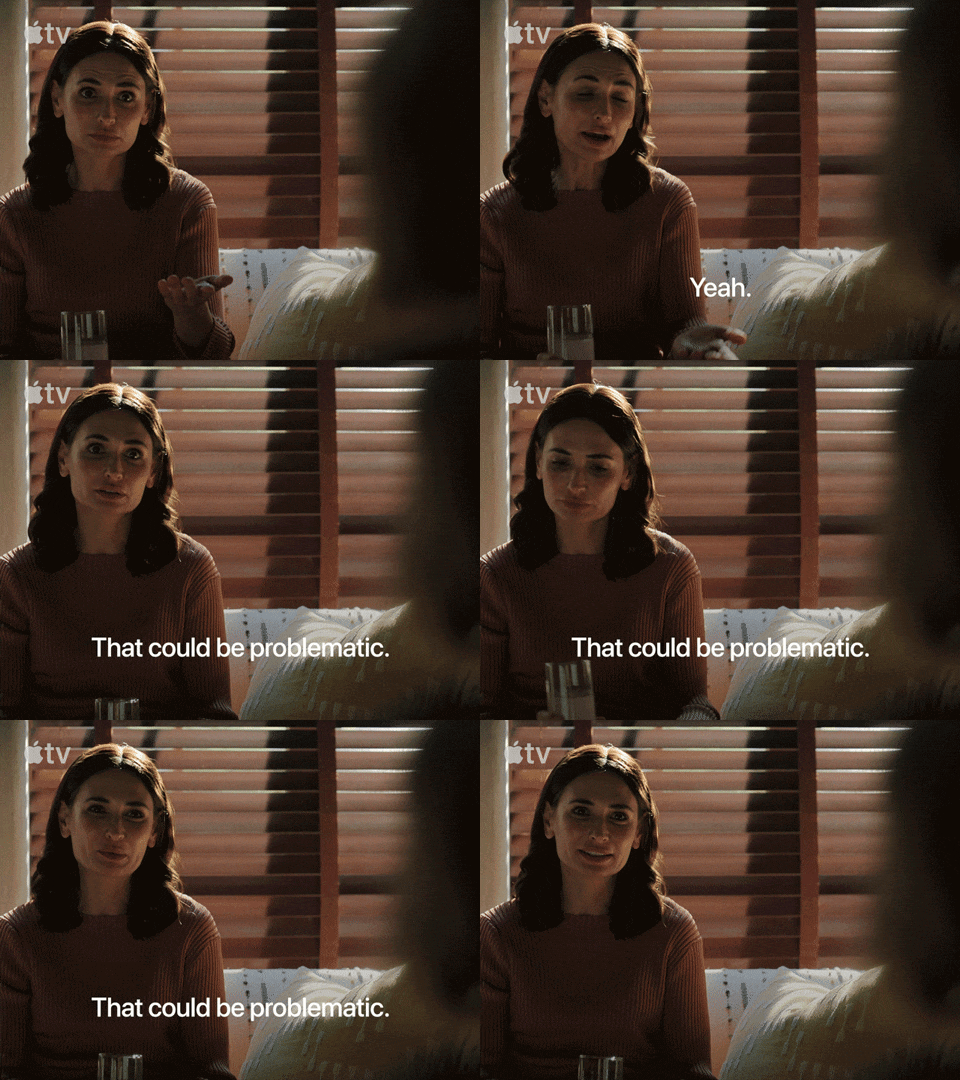
It feels like the writers didn’t know how to write a smart woman, so they wrote a “difficult” one instead and hoped the audience wouldn’t notice. Maybe they thought if the man snaps his fingers and she says I don’t respond to snap and being confrontational for no reason, that would be strength?
8. The Finale: Tantrums and Cheap Cliffhangers
Everything falls apart in the finale.
When the Hive admits it loves Carol exactly as much as it loves everyone else (because it’s a collective consciousness), Carol throws a tantrum. She doesn’t reject the Hive because it enslaved humanity, she rejects it because she isn’t special.
A war for the soul of humanity turns into a petty domestic dispute.
Then comes the random atom bomb reveal. This isn’t a clever subversion, it’s desperation. Carol bringing a nuke to a negotiation because her feelings were hurt doesn’t make her a badass. It makes her incoherent and again crazy emotional.
The cliffhanger exists purely to blackmail the audience into watching Season 2.
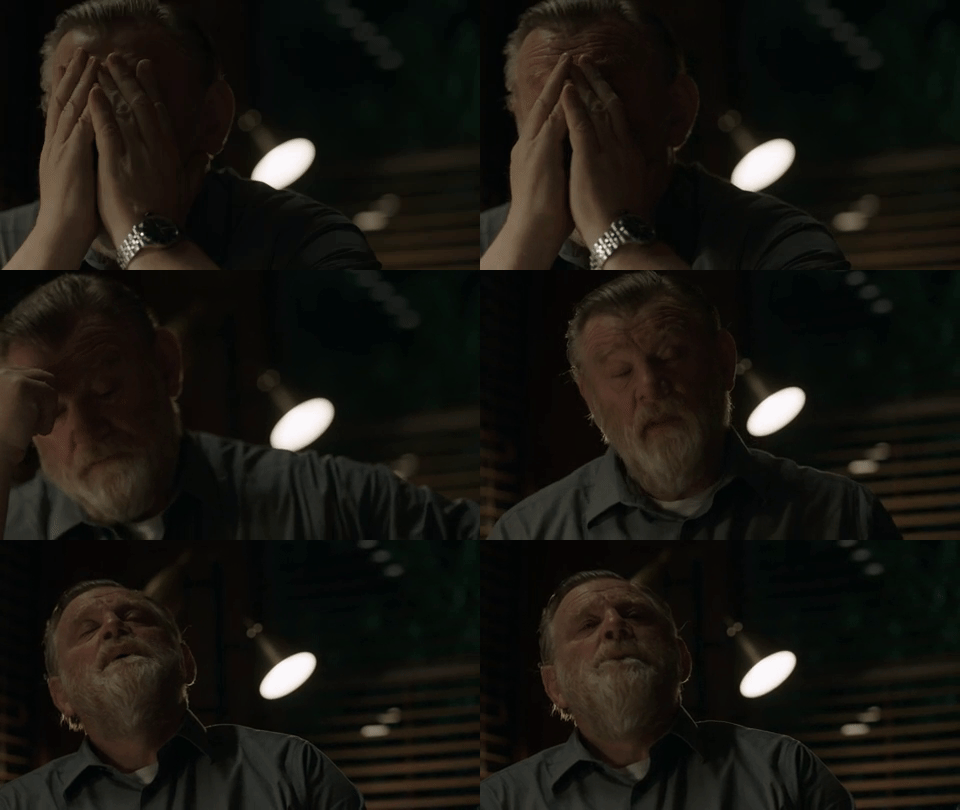
Conclusion
Pluribus pretends to challenge big questions about individuality versus collectivism, but it says nothing. It accepts its own premises without interrogating them. It shows us a “rebel” who doesn’t actually care about the cause, a romance that defies logic, and a hive mind that’s dumber than the people it conquers.
I guess what they wanted was to convince us that Carol was seduced, felt needy/lonely and fell for the love of a woman and that in the end, she was human. But come on… The hive gave you a grenade, they/she eats people, she isn’t a she but a they and not the woke pronoun. It’s only our whole species depending on Carol. But she was just a needy, stupid woman. Come on! really?
Meanwhile, genuinely thoughtful, high‑concept things like Scavengers Reign shows that respect the audience and explore alien ideas without dumbing down their characters get cancelled!!!
I don’t mind watching bad things and learning from them. That’s where these notes started.
Maybe the beauty of this show is how frustrating and stupid it ended up being!
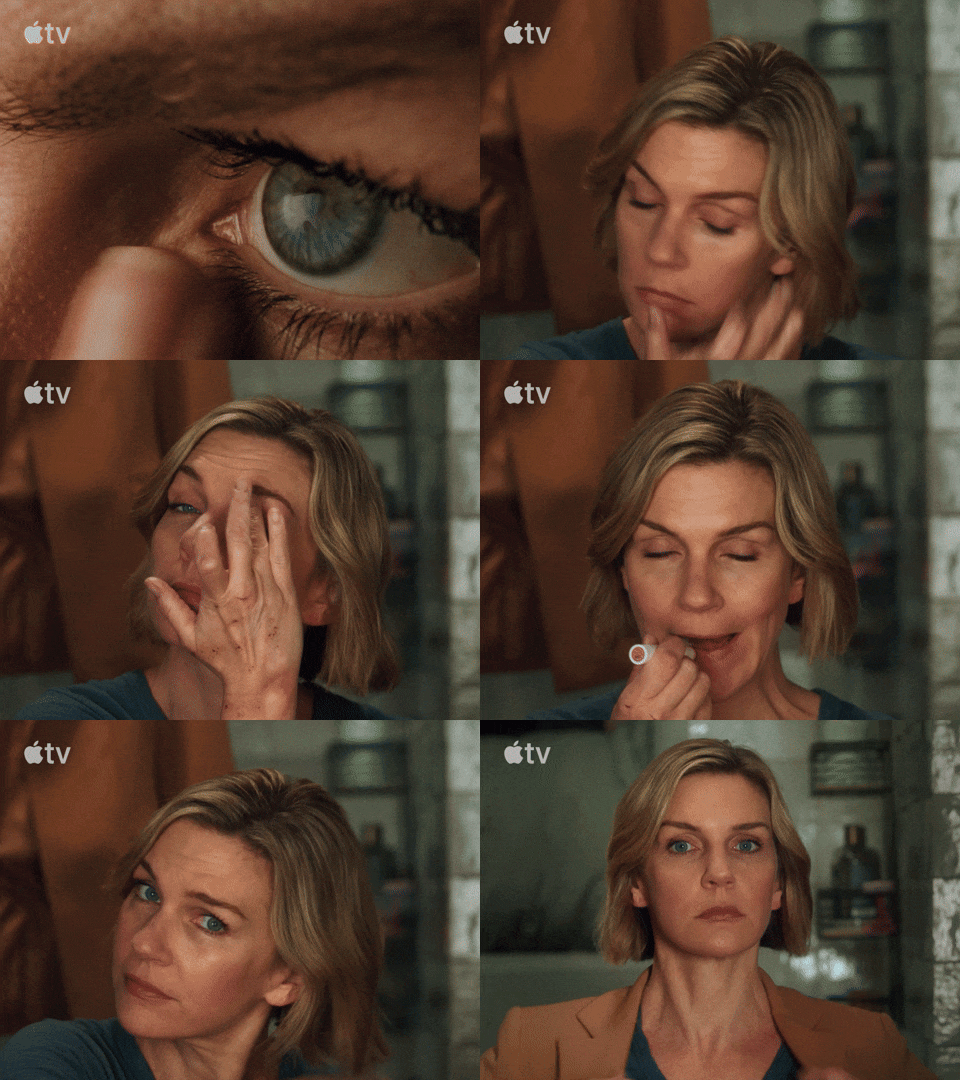
And I will admit some shots were really nice.
Especially one when she was using the vacuum or the ones below.




But life is too short to keep watching shows that insult my intelligence and don’t respect my time.
Even if they plan to say that this was always the plan, and she was infiltrating the hive, tricking them or whatever. Life is too short to wait for a “prestige” drama to fix itself when the foundation is this broken.
To make me feel something else than frustrated, annoyed and bored.
I’m done with Pluribus. I hope the next thing I watch is better. I’m tired.
And to anyone comparing this to breaking bad… You need help!